
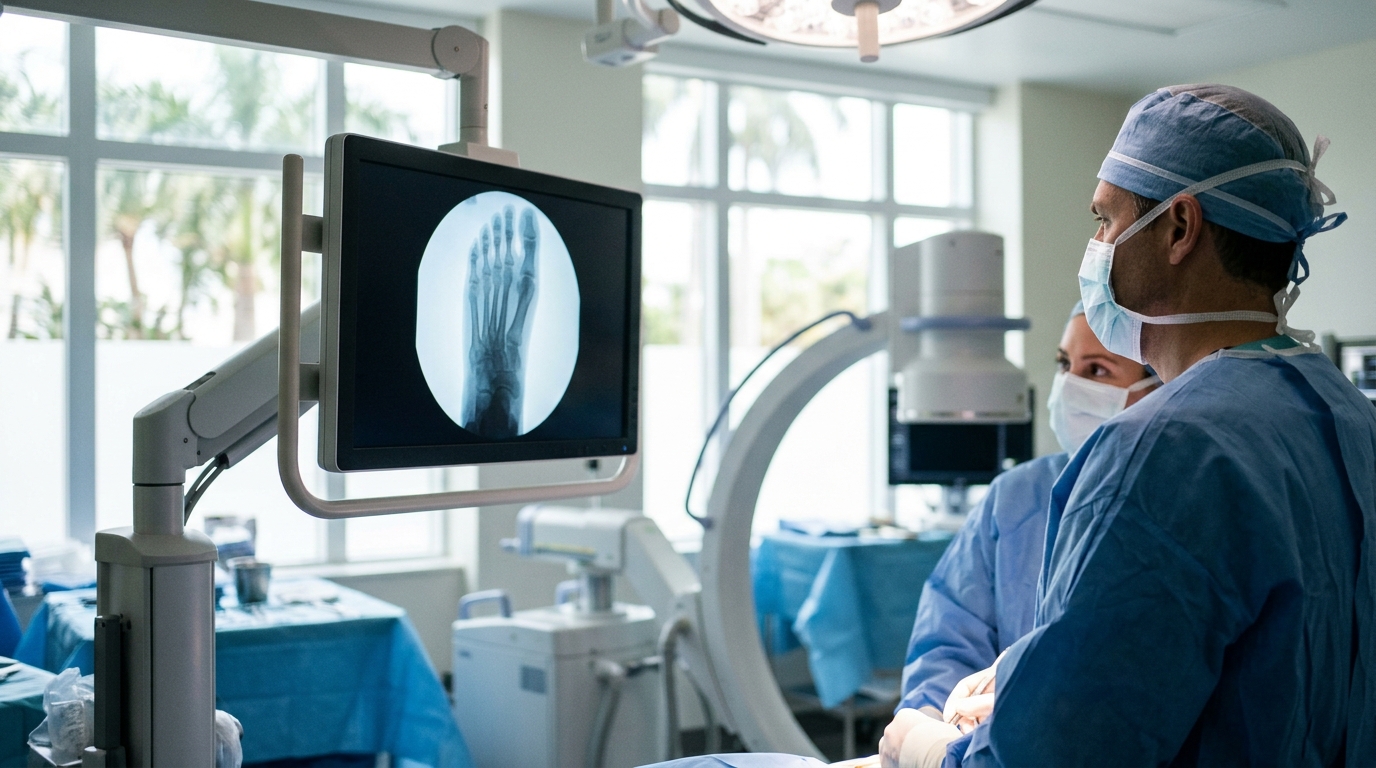
Minimally invasive bunion surgery in Miami involves correcting the bony bump through small incisions using specialized instruments and real-time X-ray guidance. The procedure typically takes 30 to 60 minutes in the operating room, followed by a short recovery period in the facility. This approach aims to reduce soft tissue trauma compared to traditional open techniques.
Pre-Surgical Preparation and Anesthesia
The process begins with a pre-operative assessment to ensure you are a suitable candidate for surgery. Your surgeon will review your medical history, current medications, and imaging studies to plan the specific correction needed for your foot anatomy. This phase ensures that any underlying health conditions are managed before the procedure.
On the day of surgery, you will arrive at the facility for final checks. Anesthesia is administered to keep you comfortable and pain-free throughout the operation. For minimally invasive bunion surgery, local anesthesia with sedation is often used, allowing for a quicker post-operative wake-up time compared to general anesthesia. The surgical team prepares the foot with sterile drapes to maintain a clean environment.
The Surgical Procedure: Incisions and Bone Correction
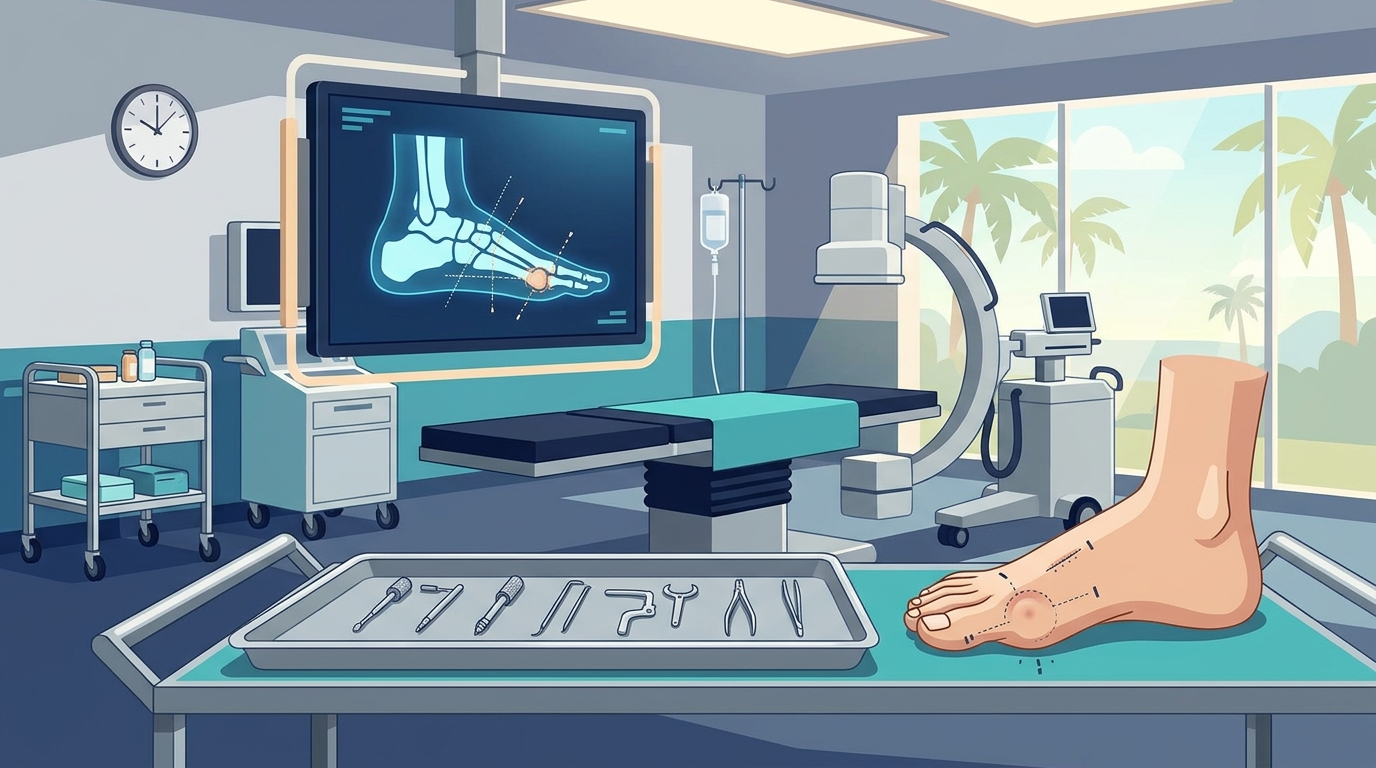
Once anesthesia is effective, the surgeon makes one or more small incisions, typically a few millimeters in length, near the bunion area. These small entry points allow the surgeon to access the bone without making large cuts that disrupt the surrounding soft tissues. Specialized instruments, such as a small burr, are used to remove the bony prominence and realign the toe.
Real-time X-ray guidance is a critical component of this technique. It allows the surgeon to visualize the bone structure and ensure precise alignment while working through the small incisions. This precision helps in correcting the underlying deformity rather than just the visible bump. The bone is then stabilized, often with small screws or pins, to hold it in the corrected position while it heals.
Closure and Immediate Post-Operative Care
After the bone is realigned and stabilized, the surgeon closes the small incisions with sutures or adhesive strips. Because the incisions are minimal, the closure process is quick and results in smaller scars. The foot is then wrapped in a sterile dressing and placed in a protective surgical shoe or boot. This immediate protection helps manage swelling and supports the healing bone.
You will be monitored in the recovery area until the anesthesia wears off. Most patients are able to walk on the affected foot with the protective shoe shortly after the procedure. The surgical team will provide instructions on how to manage the foot during the first 24 hours, including elevation and ice application to reduce swelling. You will be discharged once you are stable and able to move safely.
Recovery Timeline and Rehabilitation Phases
Recovery from minimally invasive bunion surgery generally follows a structured timeline, though individual experiences vary. The initial phase focuses on protecting the healing bone and managing swelling. You will likely wear the surgical shoe for several weeks, as determined by your surgeon. During this time, you can usually bear weight as tolerated, which helps maintain mobility.
As the bone begins to heal, the focus shifts to restoring range of motion and strength. Physical therapy may be recommended to guide you through specific exercises that improve foot function. Transitioning from the surgical shoe to regular footwear typically occurs after several weeks, once the bone has sufficiently healed. Full recovery and the ability to resume all activities, including high-impact sports, may take several months. Your surgeon will provide a personalized timeline based on your specific anatomy and healing progress.
Key Takeaways
- Minimally invasive bunion surgery uses small incisions and real-time X-ray guidance to correct the deformity.
- The surgical procedure itself typically lasts between 30 and 60 minutes.
- Local anesthesia with sedation is commonly used, facilitating a faster post-operative recovery.
- Immediate post-operative care involves wearing a protective surgical shoe and managing swelling.
- Recovery involves a phased approach, starting with protection and moving to rehabilitation and strength training.
- Individual recovery timelines vary, and your surgeon will provide a specific schedule for your case.
Frequently Asked Questions
How long does the actual surgery take?
The surgical procedure for minimally invasive bunion correction typically takes between 30 and 60 minutes. The total time in the facility, including preparation and recovery, will be longer.
What kind of anesthesia is used?
Local anesthesia with sedation is frequently used for this procedure. This allows the surgeon to work while you remain comfortable and relaxed, often avoiding the side effects associated with general anesthesia.
Will I need to stay in the hospital overnight?
Most patients undergo this procedure on an outpatient basis. You will be monitored in a recovery area and discharged the same day once you are stable and able to walk with the protective shoe.
How long do I have to wear the surgical shoe?
The duration of wearing the surgical shoe varies by patient and the specific correction performed. Your surgeon will provide a timeline, but it is typically several weeks to allow the bone to heal properly.
Can I walk immediately after the surgery?
Yes, most patients are able to walk on the affected foot immediately after surgery while wearing the protective surgical shoe. Weight-bearing is usually allowed as tolerated, but high-impact activities are restricted during the healing phase.
What is the main advantage of the minimally invasive approach?
The primary advantage is reduced soft tissue trauma. By using small incisions and specialized instruments, the procedure may result in less post-operative pain and a potentially faster return to normal activities compared to traditional open surgery.
Consult with an Orthopedic Specialist in Miami
If you are experiencing pain from a bunion and are considering surgical options, consulting with an experienced orthopedic foot and ankle surgeon is the next step. Dr. Ettore Vulcano, an orthopedic foot and ankle surgeon with a focus on minimally invasive and arthroscopic techniques, can evaluate your specific condition and discuss whether this approach is right for you. To schedule a consultation, contact our team at 4302 Alton Road, Suite 220, Miami Beach, FL 33140, or call (305) 674-2090. Learn more: Contact Ettore Vulcano MD.