
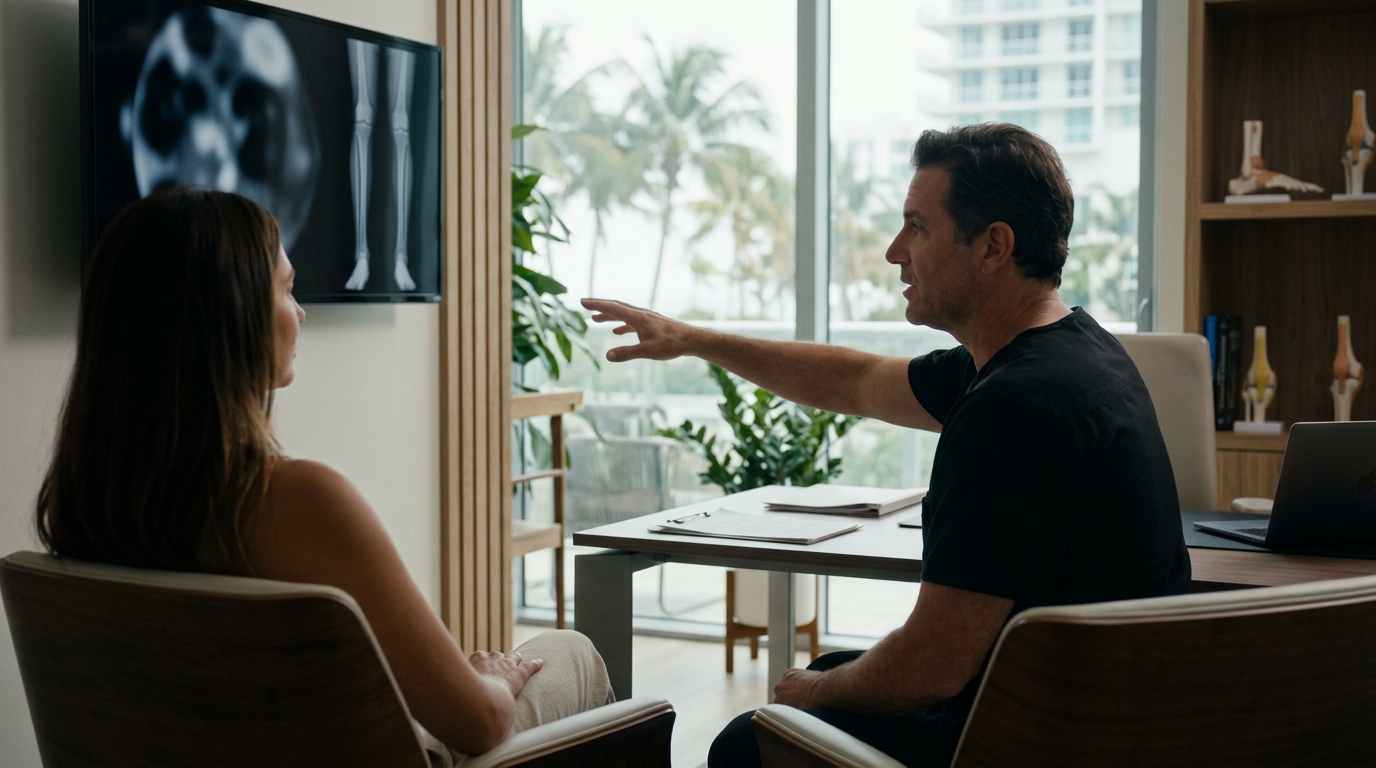
Limb reconstruction surgery in Miami is a complex orthopedic procedure designed to correct structural deformities, restore function, or address significant limb length discrepancies. The process involves a controlled bone cut, gradual mechanical distraction, and a biological healing phase known as consolidation. At Ettore Vulcano, MD, the focus is on personalized care using advanced techniques tailored to each patient.
Pre-Surgical Evaluation and Planning
The journey begins with a comprehensive diagnostic phase. Your surgeon will review your medical history and perform a physical examination to assess the severity of the deformity or discrepancy. Imaging studies, such as standing full-length X-rays and MRI scans, are essential to map out the bone structure and soft tissue health. This step ensures that the surgical plan is tailored to your specific anatomy and goals.
During this stage, you will discuss your expectations and potential risks. The surgeon will explain the specific technique they intend to use, whether it involves internal nails or external fixators. Understanding the plan beforehand helps you prepare mentally and logistically for the procedure and the subsequent recovery period.
The Surgical Procedure: Osteotomy and Fixation
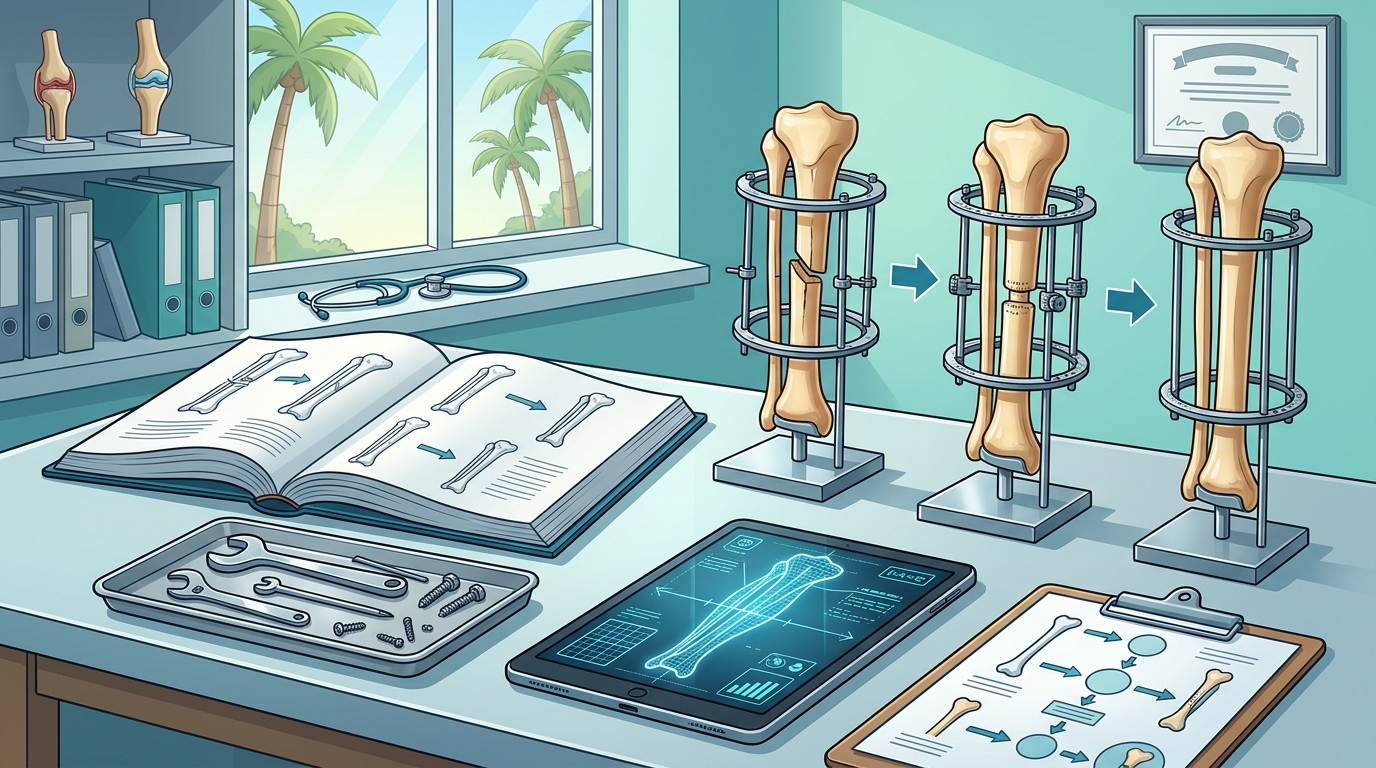
The core of limb reconstruction is the osteotomy, a controlled cut made in the bone, typically the femur or tibia. This cut allows the bone to be separated gradually. The surgeon then applies a lengthening device, which may be an internal magnetic nail or an external frame, to hold the bone segments in place. The goal is to create a stable environment for new bone to form.
For many patients, internal lengthening nails may be preferred because they are fully implanted inside the bone, which can offer greater comfort compared to external frames. The surgery itself is performed under general anesthesia, and the duration varies depending on the complexity of the case. Your surgeon will provide specific details about the hardware used and how it will be controlled during the lengthening phase.
The Distraction Phase: Gradual Lengthening
After the initial surgery, the distraction phase begins. This is where the bone is slowly separated at a rate of approximately 1 millimeter per day. This gradual process allows the body to generate new bone, muscle, and soft tissue in the gap. The rate of lengthening is critical; moving too quickly can damage the tissues, while moving too slowly may lead to stiffness or bone fusion before the desired length is reached.
Patients with internal nails often control the lengthening themselves using a remote control device, which activates the magnet inside the nail. This phase requires strict adherence to the prescribed schedule. You will attend regular follow-up appointments to monitor progress through X-rays and clinical exams. The duration of this phase depends on the amount of lengthening required, which varies by individual.
Consolidation and Rehabilitation
Once the desired length is achieved, the bone enters the consolidation phase. During this time, the new bone hardens and strengthens. The lengthening device remains in place to provide stability until the bone is fully healed. Physical therapy is a crucial component of this stage, focusing on restoring range of motion, strength, and gait mechanics. The goal is to ensure that the limb functions correctly once the hardware is removed.
Rehabilitation is ongoing throughout the entire process, but it becomes more intensive during consolidation. You will work with a physical therapist to perform exercises that prevent joint stiffness and muscle atrophy. The timeline for consolidation varies, and your surgeon will monitor healing through imaging to determine when the device can be safely removed.
Hardware Removal and Final Recovery
After the bone has fully consolidated, the lengthening device is removed in a minor surgical procedure. This step is necessary to complete the reconstruction and allow for unrestricted movement. Following hardware removal, the focus shifts to final rehabilitation. You will continue physical therapy to regain full strength and endurance. Most patients can return to normal activities and sports gradually, guided by their surgeon’s recommendations.
The final recovery phase ensures that the limb is not only longer or realigned but also functional. Your surgeon will provide a personalized timeline for returning to work and high-impact activities. Regular follow-ups will continue to monitor long-term stability and address any residual issues.
Key Takeaways
- Limb reconstruction involves a controlled bone cut (osteotomy) followed by gradual lengthening.
- The distraction phase typically involves lengthening at a rate of about 1 mm per day.
- Internal nails and external fixators are the two main types of devices used for lengthening.
- Physical therapy is essential throughout all phases to maintain mobility and strength.
- The consolidation phase allows new bone to harden before the device is removed.
- Recovery timelines vary by individual, and your surgeon will provide a specific plan for your case.
Frequently Asked Questions
How long does the distraction phase take?
The duration of the distraction phase depends on the amount of lengthening required. Since the bone is typically lengthened at a rate of about 1 millimeter per day, the phase lasts as long as it takes to achieve the desired length. Your surgeon will calculate the specific timeline based on your goals and anatomy.
What is the difference between internal and external lengthening devices?
Internal devices, such as magnetic nails, are implanted inside the bone and controlled with a remote. External devices are frames attached to the outside of the leg with pins. Internal devices generally offer more comfort, while external frames may be used for complex deformities.
Can I walk during the lengthening process?
Yes, most patients are encouraged to bear weight and walk during the distraction phase. Walking helps stimulate bone healing and prevents muscle atrophy. Your surgeon will provide specific weight-bearing instructions based on your progress and the type of device used.
How painful is the surgery and recovery?
Pain management is a key part of the process. While the surgery itself is performed under anesthesia, you may experience discomfort during the lengthening and consolidation phases. Pain is typically managed with medication and physical therapy. Your surgeon will work with you to develop a pain management plan.
Where is the surgery performed in Miami?
Dr. Ettore Vulcano performs limb reconstruction surgery at his practice located at 4302 Alton Road, Suite 220, Miami Beach, FL 33140. You can contact our team at (305) 674-2090 to schedule a consultation and discuss your specific case.
Conclusion
Limb reconstruction surgery is a significant undertaking that requires patience, commitment, and close collaboration with your surgical team. By understanding the step-by-step process, from pre-surgical planning to final recovery, you can make informed decisions and prepare for the journey ahead. At Ettore Vulcano, MD, we are dedicated to providing personalized care and advanced techniques to help you work toward your recovery goals. To discuss your options, contact our team to schedule a consultation.