
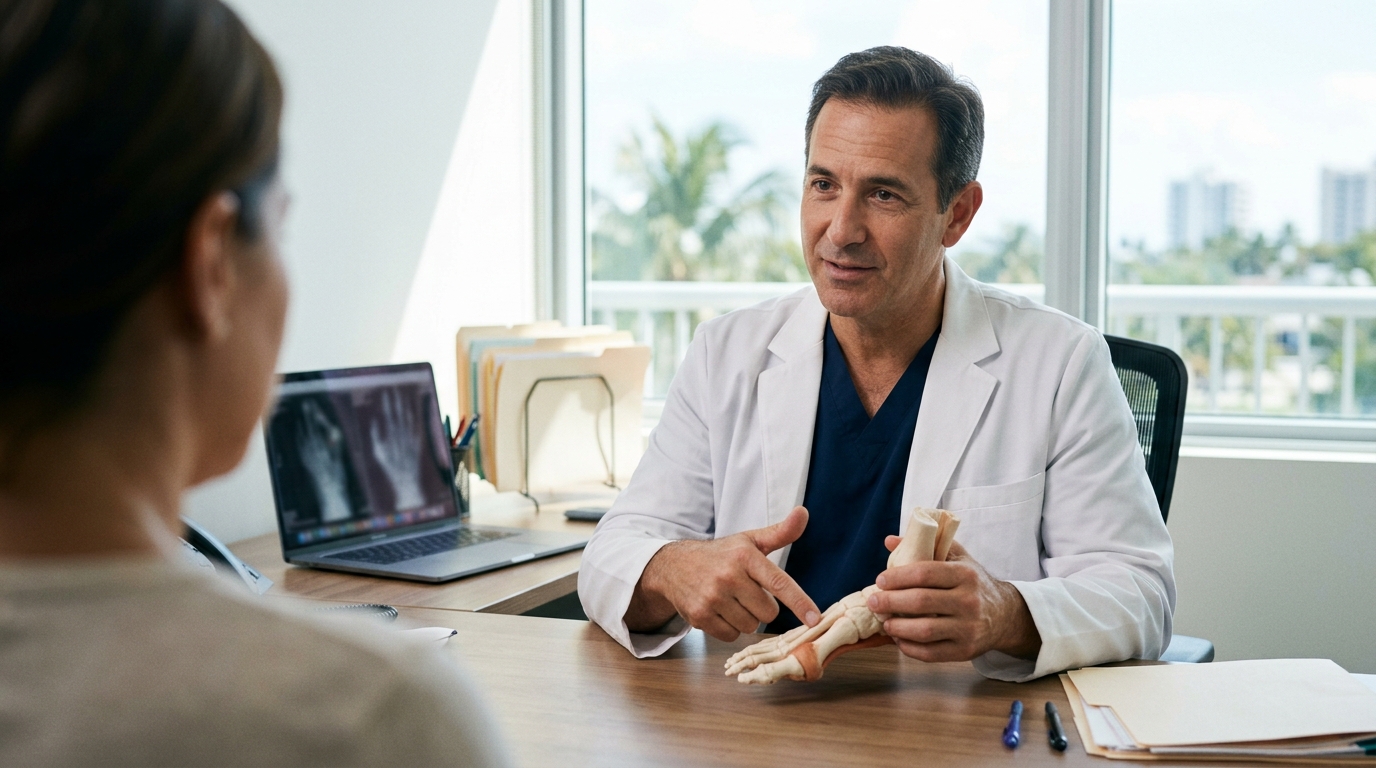
Bunion correction surgery aims to realign the bones of the foot to relieve pain and improve function. In Miami, orthopedic surgeons utilize a range of procedures, from conservative adjustments to complex reconstructive osteotomies, tailored to the severity of the deformity. Dr. Ettore Vulcano, an orthopedic foot and ankle surgeon in Miami, specializes in minimally invasive techniques that focus on precise bone realignment and faster recovery.
1. Minimally Invasive Bunion Surgery (MIBS)
Minimally invasive bunion surgery uses small incisions and specialized instruments to correct the deformity with less soft tissue trauma. This technique allows the surgeon to perform the osteotomy (bone cut) and realignment through incisions that are typically very small. By avoiding large open incisions, the procedure may result in less postoperative pain and a quicker return to normal activities. Dr. Vulcano frequently employs this approach for patients with mild to moderate bunion deformities.
2. Medial Closing Wedge Osteotomy
A medial closing wedge osteotomy removes a wedge of bone from the inside of the first metatarsal to straighten the toe. This is a common technique for correcting the angle of the big toe joint. The bone is stabilized with screws or pins to hold it in the new position while it heals. This procedure is often chosen when the bunion is primarily an angular deformity without significant shortening of the bone.
3. Lateral Opening Wedge Osteotomy
A lateral opening wedge osteotomy opens a gap on the outside of the first metatarsal to correct the toe angle without shortening the bone. This technique is useful for patients who need to maintain the length of their first metatarsal. The gap is filled with a bone graft or a synthetic material to support the bone as it heals. It is a versatile option for various degrees of bunion severity.
4. Distal First Metatarsal Osteotomy (Chevron)
A chevron osteotomy involves a V-shaped cut in the distal first metatarsal to correct the bunion angle. This procedure is often used for mild to moderate bunions where the deformity is primarily at the joint level. The V-shaped cut provides stability and allows for precise correction of the toe alignment. It is a well-established technique with a predictable healing process.
5. Proximal First Metatarsal Osteotomy
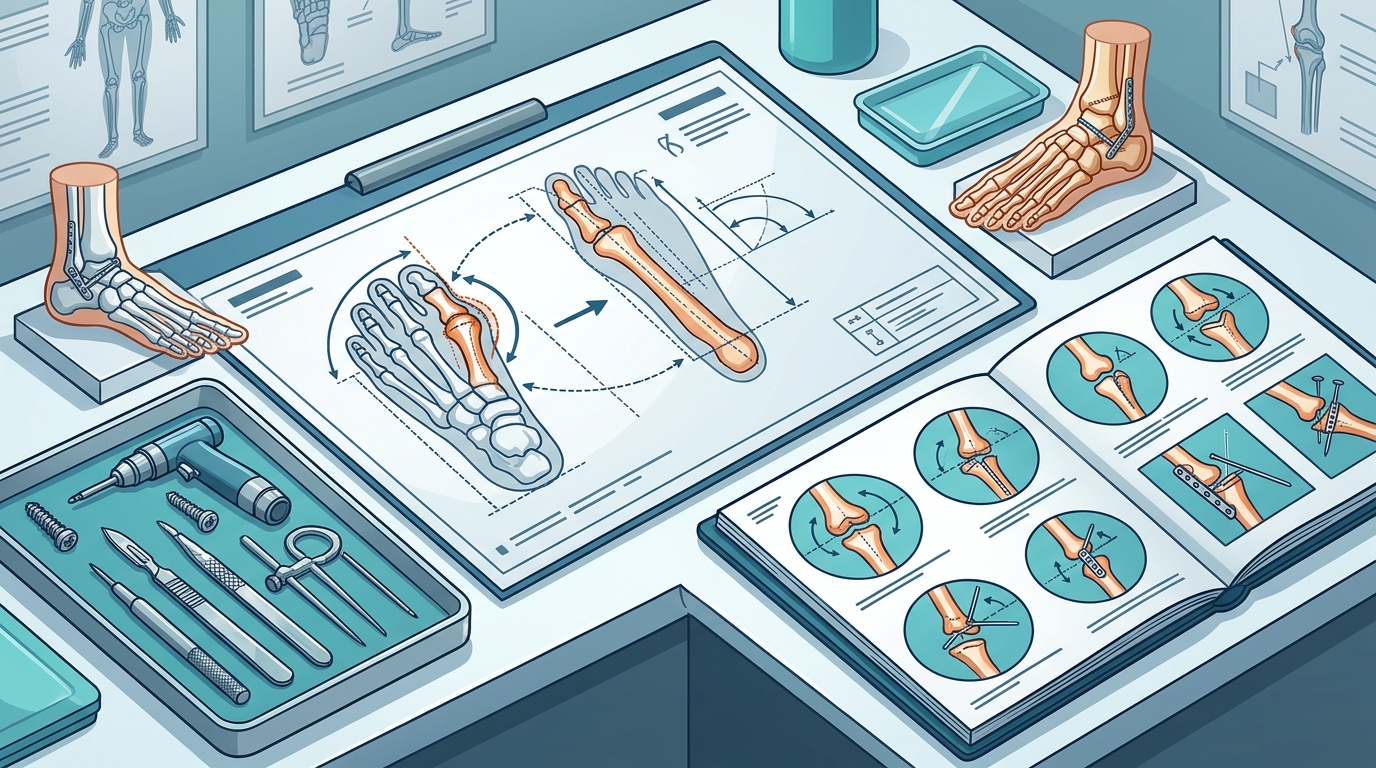
A proximal osteotomy is performed higher up on the first metatarsal bone to correct severe bunion deformities. This technique is used when the deformity is more complex and involves the base of the metatarsal. It allows for greater correction of the angle and can address issues with the metatarsal head position. This is a more extensive procedure but is necessary for severe cases.
6. First Metatarsophalangeal Joint Arthrodesis (Fusion)
First MTP arthrodesis involves fusing the big toe joint to eliminate pain from arthritis or severe deformity. This is an option for patients with significant arthritis or failed previous surgeries. The joint is immobilized and allowed to heal into a solid bone, eliminating motion and pain. While it reduces range of motion, it can provide a stable big toe for walking.
Choosing the Right Technique
The choice of bunion correction technique depends on the severity of the deformity, the presence of arthritis, and the patient's activity level. A thorough evaluation by an orthopedic surgeon is essential to determine the most appropriate procedure. Dr. Vulcano in Miami provides personalized care plans that consider these factors to support patient recovery.
Frequently Asked Questions
What is the most common bunion surgery technique?
Minimally invasive bunion surgery and distal osteotomies are among the most common techniques used for mild to moderate bunions. The specific technique chosen depends on the individual's anatomy and the severity of the deformity.
How long does bunion surgery recovery take?
Recovery time varies by person and the specific procedure performed. Generally, patients can expect to be in a surgical shoe for several weeks, with full recovery taking several months. Your surgeon will provide a detailed timeline for your case.
Is bunion surgery painful?
Pain is managed with medication and ice in the immediate postoperative period. Minimally invasive techniques may result in less pain compared to traditional open surgery. Most patients report significant relief from their pre-surgical pain once healed.
Can I walk after bunion surgery?
Weight-bearing status depends on the type of surgery. Some procedures allow immediate weight-bearing in a surgical shoe, while others require a period of non-weight-bearing. Your surgeon will guide you on when and how to bear weight.
Where can I find a bunion specialist in Miami?
Dr. Ettore Vulcano is an orthopedic foot and ankle surgeon in Miami who specializes in bunion correction. His practice is located at 4302 Alton Road, Suite 220, Miami Beach, FL 33140. You can contact the office at (305) 674-2090 to schedule a consultation.
Consult with a Specialist in Miami
If you are experiencing bunion pain, consider consulting with an experienced orthopedic surgeon. Dr. Ettore Vulcano offers advanced bunion correction techniques in Miami, focusing on minimally invasive approaches to aid recovery. To discuss your options, contact our team to schedule an appointment. Learn more: Contact Ettore Vulcano MD.