

Bunion correction techniques vary primarily by incision size and bone modification method, which directly impacts recovery speed and comfort. In Miami, patients can choose between traditional open surgery and modern minimally invasive approaches. The right choice depends on the severity of your deformity and your activity goals. Dr. Ettore Vulcano, an orthopedic foot and ankle surgeon, helps patients navigate these options to find the best fit for their anatomy.
Understanding Bunion Deformity and Surgical Goals
A bunion, medically known as hallux valgus, is a bony bump that forms on the inside of the foot at the base of the big toe. This deformity occurs when the big toe angles toward the smaller toes, shifting weight to the other toes. Surgery aims to realign the bones and correct the joint angle to restore normal foot mechanics. The goal is not just cosmetic improvement but also pain relief and better gait stability.
Before surgery, patients typically try conservative treatments like wider shoes, orthotics, and anti-inflammatory medications. Surgery is considered when these methods fail to relieve pain or when the deformity worsens. Understanding the specific type of bunion you have is the first step in choosing the right technique.
Traditional Open Bunion Surgery
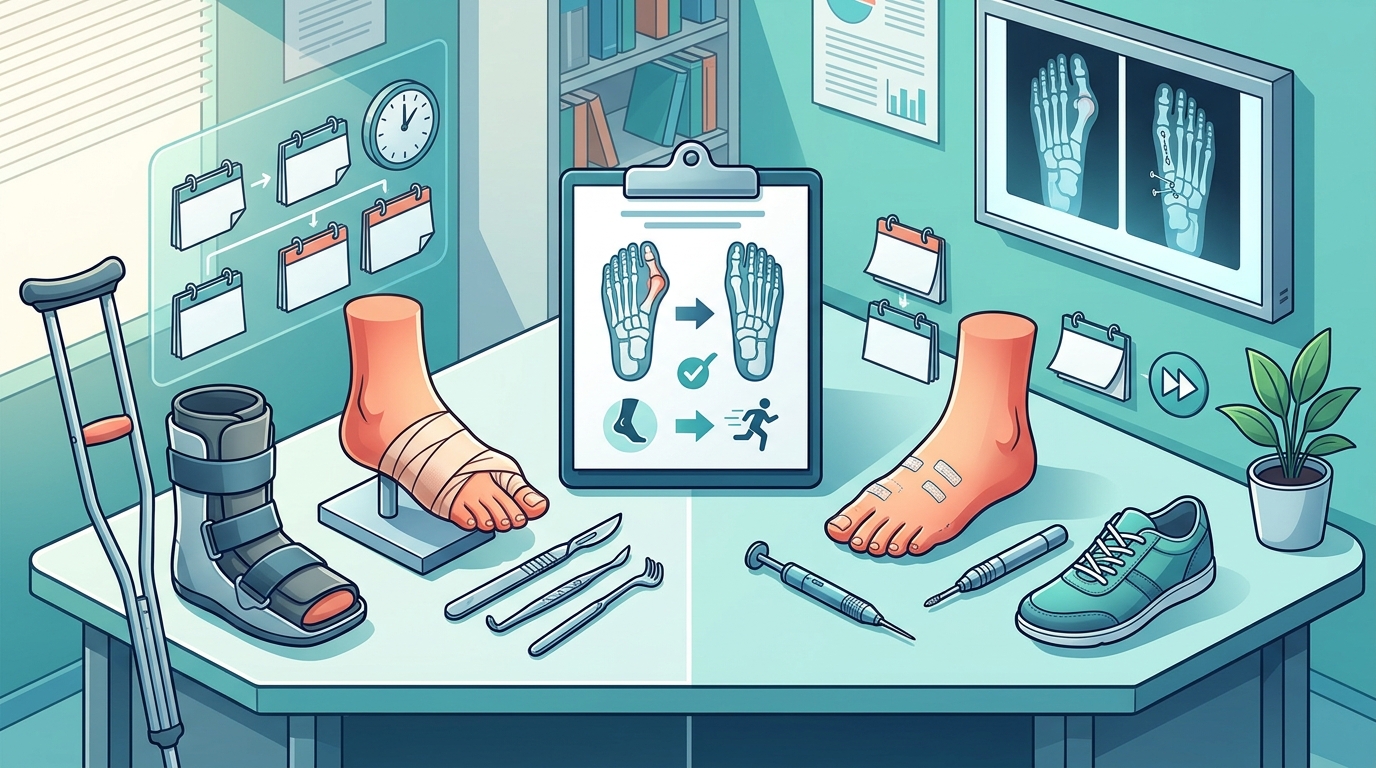
Traditional open bunion surgery involves making a larger incision to directly visualize and correct the bone deformity. This approach allows the surgeon to see the bones and soft tissues clearly. It is a well-established method with a long history of successful outcomes. The surgeon may perform an osteotomy, which is a controlled cut in the bone, to realign the metatarsal and phalanx.
Recovery from open surgery typically involves a period of non-weight bearing or limited weight bearing in a boot. Patients may experience more postoperative pain and swelling compared to minimally invasive options. The larger incision can lead to a more noticeable scar. However, open surgery remains a viable option for complex deformities where direct visualization is necessary.
Minimally Invasive Bunion Surgery (MIBS)
Minimally invasive bunion surgery (MIBS) is a technique that corrects the bunion through very small incisions, often just a few millimeters long. This approach uses specialized instruments and X-ray guidance to perform the bone cuts and realignment. The smaller incisions mean less damage to the surrounding soft tissues. This can result in less pain and swelling in the immediate postoperative period.
Recovery with MIBS is often faster, allowing patients to return to normal activities sooner. The smaller incisions also lead to better cosmetic results with smaller scars. MIBS is suitable for many patients with mild to moderate bunion deformities. It is an important option for active individuals who want to minimize downtime.
Comparing Recovery Timelines and Comfort
The main difference between open and minimally invasive techniques is the recovery experience. Open surgery generally requires a longer period of protection for the healing bones. Patients may need to use crutches or a walker for several weeks. Minimally invasive techniques often allow for earlier weight bearing and a quicker return to work and daily activities.
Pain management is another key factor. Patients undergoing MIBS often report less pain in the first few days after surgery. This can reduce the need for strong pain medications. However, individual recovery varies based on the patient's health, the complexity of the deformity, and adherence to postoperative instructions. Your surgeon will provide a personalized timeline for your case.
Choosing the Right Technique for Your Needs
Selecting the right bunion correction technique depends on several factors. The severity of the deformity is the most important consideration. Some complex bunions may require open surgery for adequate correction. Other factors include your age, activity level, and overall health. A thorough evaluation by an experienced surgeon is essential to determine the best approach.
At Ettore Vulcano, MD, we focus on providing personalized care for complex conditions of the lower extremities. We use advanced techniques to help patients achieve long-term relief and return to activity safely. If you are considering bunion surgery in Miami, a consultation can help you understand your options and what to expect from recovery.
Key Takeaways
- Bunion surgery aims to correct bone alignment and relieve pain, not just improve appearance.
- Traditional open surgery involves larger incisions and may require a longer recovery period.
- Minimally invasive bunion surgery (MIBS) uses small incisions and often leads to faster recovery.
- Recovery timelines vary by individual, deformity severity, and surgical technique.
- Conservative treatments should be tried before considering surgery.
- Consulting with an experienced orthopedic surgeon is crucial for choosing the right technique.
Frequently Asked Questions
What is the difference between open and minimally invasive bunion surgery?
Open surgery involves a larger incision to directly see the bones, while minimally invasive surgery uses small incisions and X-ray guidance. Minimally invasive techniques often result in less pain and faster recovery.
How long does bunion surgery recovery take?
Recovery time varies by technique and individual. Minimally invasive surgery may allow a quicker return to normal activities, while open surgery may require a longer period of protection. Your surgeon will provide a specific timeline for your case.
Is bunion surgery painful?
Postoperative pain is common but manageable. Minimally invasive techniques often result in less pain in the first few days. Pain medication and proper care can help manage discomfort during recovery.
Who is a good candidate for bunion surgery?
Good candidates are those with persistent pain despite conservative treatments, significant deformity, or difficulty with daily activities. A surgeon will evaluate your specific condition to determine if surgery is appropriate.
Can I walk after bunion surgery?
Weight bearing depends on the surgical technique and the extent of the correction. Some patients can walk with a boot immediately, while others may need to be non-weight bearing for a period. Your surgeon will give specific instructions.
Next Steps for Bunion Care in Miami
If you are experiencing bunion pain in Miami, consider scheduling a consultation with Dr. Ettore Vulcano. As an orthopedic foot and ankle surgeon with a focus on minimally invasive techniques, he can evaluate your condition and discuss the best surgical options for your needs. To plan your visit, contact our team to learn more about how we can help you achieve pain-free movement.