
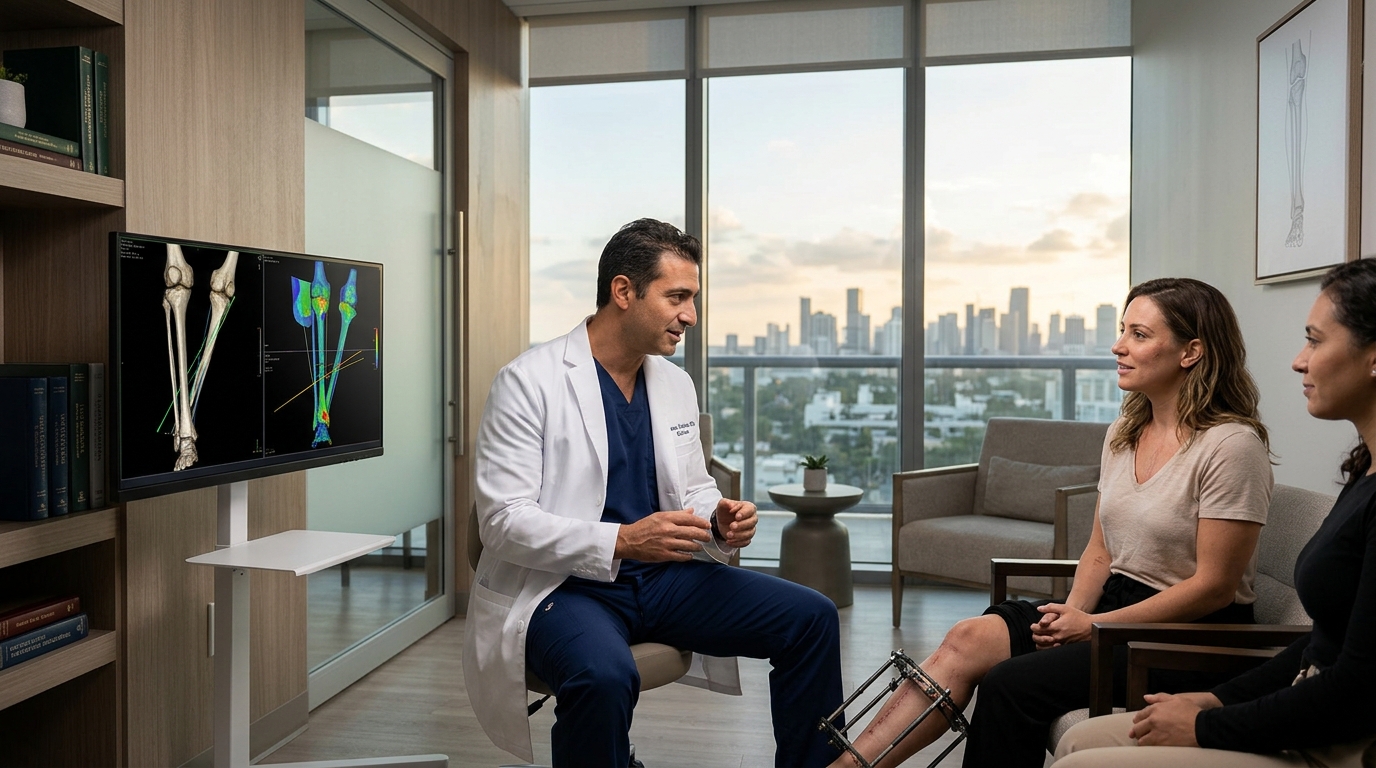
Complex limb reconstruction in Miami FL is best sought at specialized orthopedic practices that focus on advanced foot, ankle, and lower extremity deformity correction. Ettore Vulcano, MD provides expert care in this niche, offering minimally invasive techniques for conditions like limb lengthening and realignment. This guide covers how to evaluate specialists, verify credentials, understand costs, and navigate the surgical process in the Miami area.
How to Choose a Specialist
Choosing a specialist for complex limb reconstruction requires looking beyond general orthopedic training. Complex limb reconstruction is a surgical discipline that addresses severe deformities, length discrepancies, and functional impairments in the lower extremities. Not all orthopedic surgeons perform these advanced procedures regularly. You should seek a surgeon who specializes in foot and ankle surgery with a specific focus on limb reconstruction and lengthening.
Specialization and Volume
High-volume surgeons often achieve better outcomes in complex cases. Look for providers who perform a wide variety of these procedures. Ettore Vulcano, MD is recognized for performing a high volume of minimally invasive foot and ankle procedures. When evaluating a candidate, ask about their specific case volume for the exact condition you have, such as limb lengthening or genu varum correction.
Minimally Invasive Expertise
Modern reconstruction often utilizes minimally invasive techniques to reduce trauma and speed recovery. A good specialist will explain how their approach differs from traditional open surgery. They should be able to detail the benefits of smaller incisions, such as lower infection risks and faster return to activity.
Questions to Ask Before Committing
During your initial consultation, specific questions will reveal the depth of a surgeon's expertise. Do not be afraid to ask for data or detailed explanations of the surgical plan.
Procedure-Specific Questions
- How many of this specific procedure have you performed in the last five years?
- What is your complication rate for this specific surgery?
- Do you use internal or external fixation devices, and why?
Recovery and Support
- What does the rehabilitation timeline look like week by week?
- Who manages the post-operative care, and how often will I see you?
- What are the signs of a complication I should watch for at home?
Verifying Credentials and Claims
Verifying a surgeon's background is essential for safety. While you should not rely solely on marketing materials, you can check professional registries and hospital affiliations. Ensure the surgeon is licensed to practice in Florida and has the specific training required for the procedure.
Checking Professional Standing
You can verify a physician's license and any disciplinary actions through the Florida Board of Medicine. Additionally, check if the surgeon is affiliated with a reputable hospital system. Dr. Vulcano maintains a strong professional presence in the Miami Beach area, and his credentials can be verified through standard medical licensing databases.
The Surgical Process and Timeline
Complex limb reconstruction is rarely a single-day event. It is a phased process involving surgery, gradual correction, and consolidation.
Phase 1: Osteotomy and Setup
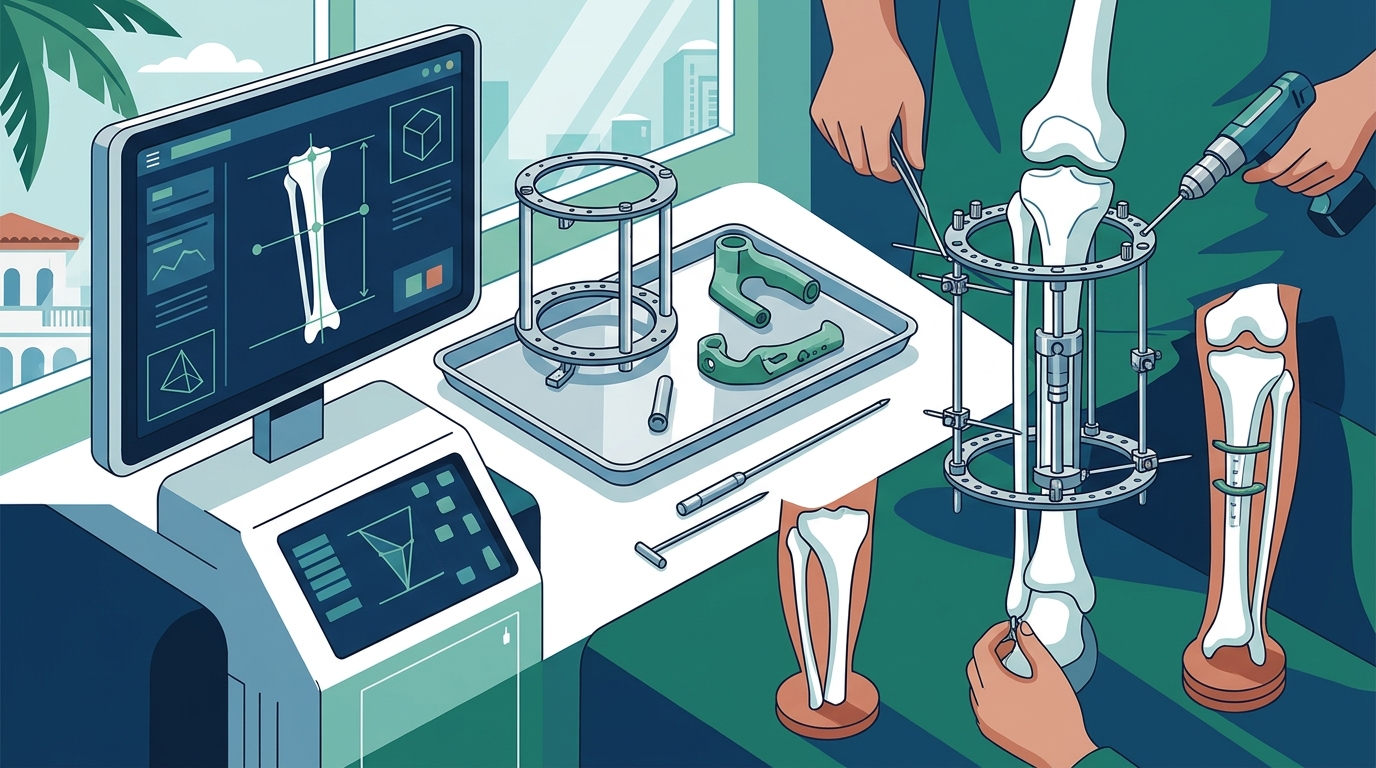
The surgeon makes a controlled cut in the bone (osteotomy) and places a lengthening device. This is the initial surgical phase.
Phase 2: Distraction
After a healing period, the bone is slowly separated, typically at a rate of about 1 mm per day. New bone forms in the gap. This phase can last several weeks depending on the amount of lengthening or correction needed.
Phase 3: Consolidation
Once the desired length or alignment is reached, the bone must harden. The device remains in place until the bone is fully healed, which can take several months.
Understanding Cost Factors
Costs for complex limb reconstruction vary significantly based on the complexity of the case and the technology used. Factors that drive price include the type of implant (internal vs. external), the length of hospital stay, and the duration of physical therapy. Insurance coverage for functional reconstruction is more common than for cosmetic lengthening. Always request a detailed estimate from the surgeon's office before proceeding. Structured mentorship and guidance are often highlighted as important components in managing complex reconstruction cases.
Common Mistakes to Avoid
Patients often make errors that can complicate recovery. One common mistake is underestimating the commitment required for rehabilitation. Another is choosing a surgeon based solely on cost rather than experience. Understanding potential surgical complications is also vital. Patients should be aware of risks such as infection, nonunion, or hardware failure, and have a clear plan for managing them.
Comparison with Alternative Treatments
For many conditions, surgery is not the only option. Conservative treatments like physical therapy, orthotics, and bracing can manage mild symptoms. However, they do not correct underlying bone alignment. Surgery is considered when conservative measures fail or when the deformity causes progressive joint damage.
| Treatment Type | Goal | Recovery Time | Permanence |
|---|---|---|---|
| Physical Therapy | Pain relief, strength | Weeks to Months | Temporary |
| Orthotics/Bracing | Support, alignment | Immediate | Temporary |
| Minimally Invasive Surgery | Structural correction | Months | Permanent |
Considerations for Specific Cases
The approach changes depending on the specific diagnosis. For example, bow legs (genu varum) require realignment to shift weight away from the inner knee, while knock knees (genu valgum) require correction of the outer knee stress. Limb lengthening for functional discrepancy focuses on restoring gait balance, whereas cosmetic lengthening requires a different psychological and physical preparation.
Patient Rights and Protections
Patients in Florida have specific rights regarding informed consent and medical records. You have the right to understand the risks, benefits, and alternatives of any procedure. You also have the right to access your medical records and imaging. Ensure that all agreements regarding costs and care plans are documented in writing.
Local Specifics in Miami
Miami offers a concentration of specialized orthopedic care. The climate can be a factor in recovery, as warm weather may affect swelling and comfort during the healing process. Ettore Vulcano, MD is located in Miami Beach, providing convenient access for patients in the greater Miami area. Local support networks and physical therapy facilities are also well-established in this region.
The Importance of Timing
Timing is critical in limb reconstruction. Acting too early may mean the deformity is not fully developed, while acting too late can lead to permanent joint damage. For post-traumatic arthritis, early intervention can preserve the joint. For congenital discrepancies, timing is often coordinated with growth plates. Discuss the optimal window for surgery with your specialist. Experienced guidance is often emphasized as a key factor in the success of these scenarios.
Long-Term Outcomes
Successful reconstruction leads to improved mobility, reduced pain, and better quality of life. Long-term outcomes depend on adherence to rehabilitation protocols. Patients who follow their physical therapy plans and attend all follow-up appointments generally see the best results. Regular monitoring is essential to ensure the correction remains stable over time.
Key Takeaways
- Seek a surgeon with high volume and specific expertise in limb reconstruction.
- Verify credentials through state licensing boards and professional registries.
- Understand the phased nature of the surgery: osteotomy, distraction, and consolidation.
- Costs vary by complexity and insurance coverage; get detailed estimates.
- Minimally invasive techniques often offer faster recovery and lower complication rates.
- Conservative treatments manage symptoms but do not correct structural deformities.
- Timing of surgery is crucial to prevent long-term joint damage.
- Adherence to rehabilitation is the primary driver of long-term success.
Frequently Asked Questions
What is complex limb reconstruction?
Complex limb reconstruction is a surgical discipline that addresses severe deformities, length discrepancies, and functional impairments in the lower extremities using advanced techniques.
How long does limb lengthening surgery take?
The entire process, including healing and consolidation, typically takes several months. The distraction phase alone can last several weeks depending on the amount of lengthening.
Is minimally invasive surgery better for limb reconstruction?
Minimally invasive surgery often results in less tissue trauma, lower infection risk, and faster recovery compared to traditional open surgery, though the best approach depends on the specific case.
Can I walk after limb reconstruction surgery?
Weight-bearing status is determined by the surgeon and the phase of healing. Patients may use crutches or a walker initially and gradually progress to full weight-bearing as the bone heals.
What are the risks of limb lengthening?
Risks include infection, nonunion (bone not healing), hardware failure, and nerve or vessel injury. These risks are minimized by choosing an experienced surgeon and following post-operative care instructions.
Does insurance cover limb reconstruction?
Insurance coverage depends on the medical necessity of the procedure. Functional reconstruction is more likely to be covered than cosmetic lengthening. Always check with your insurance provider and the surgeon's office.
Conclusion
Finding the right specialist for complex limb reconstruction in Miami FL requires careful evaluation of expertise, credentials, and approach. Ettore Vulcano, MD offers advanced, patient-centered care for foot, ankle, and limb reconstruction, utilizing minimally invasive techniques to restore mobility and alignment. To begin your journey toward pain-free movement, contact our team to schedule a consultation.