
Severe adult flatfoot in Miami is effectively treated by orthopedic surgeons specializing in foot and ankle reconstruction, such as Dr. Ettore Vulcano. This condition, often called progressive collapsing foot deformity, requires precise surgical intervention to restore arch height and stability. This guide covers the anatomy of the collapse, diagnostic criteria, and advanced reconstruction techniques available in the region.
Understanding Flatfoot and Deformity
Flatfoot is a condition where the arch of the foot collapses, causing the sole to contact the ground completely. In adults, this is rarely a static shape but an active, worsening problem known as progressive collapsing foot deformity (PCFD). The primary driver of this collapse is the degeneration of the posterior tibial tendon. This tendon runs along the inside of the ankle and acts as the dynamic stabilizer for the arch. When it weakens or tears, the arch flattens progressively.
The collapse does not happen in isolation. As the arch drops, secondary damage occurs to the spring ligament, the ligaments around the heel bone, and the plantar fascia. This creates a complex deformity that affects the entire kinetic chain. Patients often report pain on the inside of the ankle, swelling, and difficulty walking. The condition can lead to secondary arthritis in the ankle and midfoot joints if left untreated. Understanding this mechanical failure is the first step toward effective treatment.
Diagnosis and Severity Assessment
Accurate diagnosis is critical because treatment depends on the stage of the deformity. A physical examination assesses the flexibility of the foot. A flexible flatfoot can still change shape during examination, while a rigid flatfoot remains stiff and may have arthritic joints. This distinction determines whether soft tissue repair or bony reconstruction is required. Imaging studies, including X-rays and MRI, are essential to evaluate tendon integrity and joint health.
Severity is often graded based on the degree of collapse and the presence of arthritis. Early stages involve tendon dysfunction without significant joint damage. Later stages involve fixed deformity and arthritis in the subtalar or midfoot joints. Dr. Vulcano evaluates these factors to tailor a highly individualized treatment strategy. The goal is to match the surgical complexity to the specific pathology of the patient.
Flatfoot Reconstruction Surgery
Flatfoot reconstruction surgery is a complex procedure designed to restore the arch and stabilize the foot. It is not a single operation but a combination of techniques tailored to the patient's anatomy. The primary goal is to correct the alignment of the bones and tendons to redistribute weight evenly. This reduces pain and prevents further joint degeneration. The surgery typically involves addressing the posterior tibial tendon, the spring ligament, and the bony structures of the hindfoot.
Soft Tissue Repair
For patients with tendon dysfunction but preserved joint health, soft tissue repair is the focus. This may involve tendon transfer, where a healthy tendon is moved to support the arch. It may also include repair of the spring ligament. These procedures aim to restore the dynamic support of the arch without altering the bone structure significantly.
Bony Reconstruction and Arthrodesis
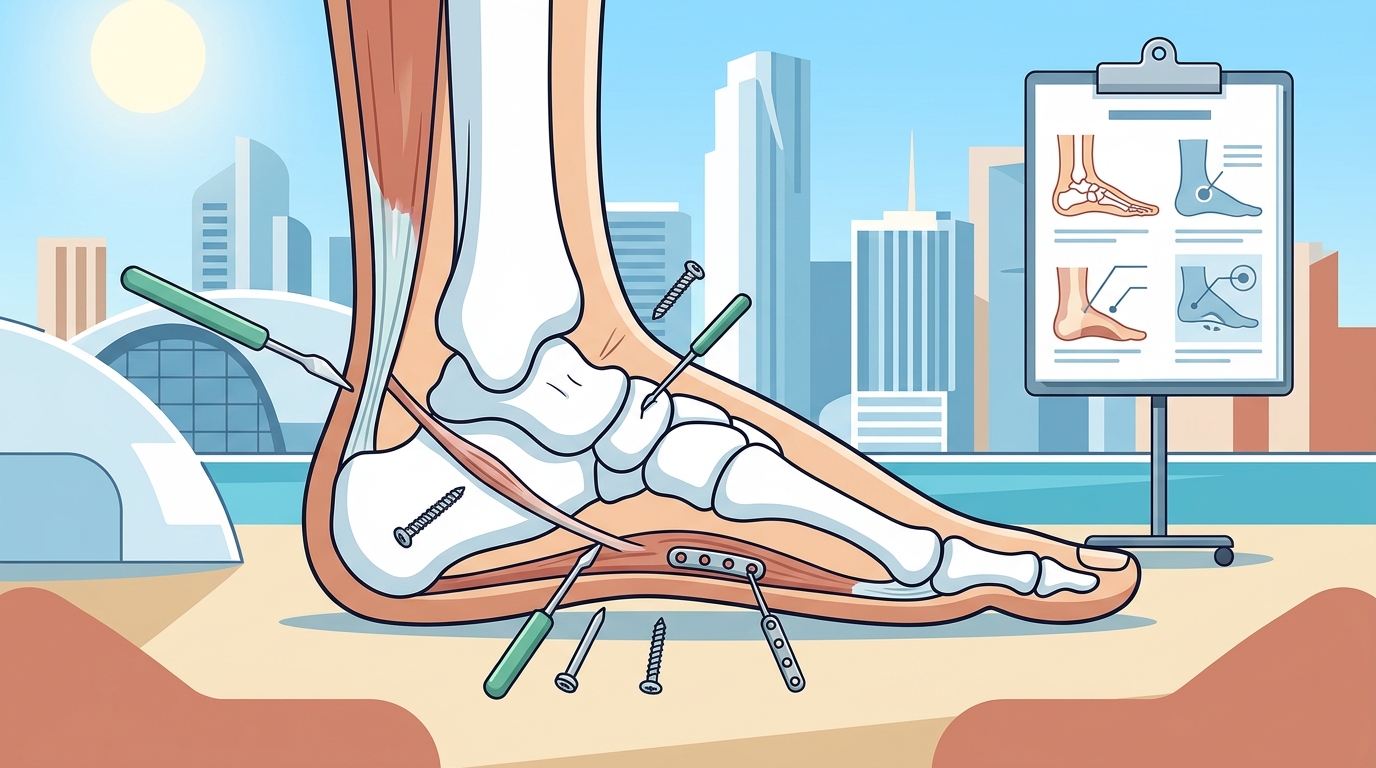
When arthritis is present or the deformity is rigid, bony reconstruction is necessary. This often involves arthrodesis, or fusion, of the joints. Fusion stabilizes the foot by fusing the bones into a single, stable unit. Common sites for fusion include the subtalar joint and the midfoot joints. This procedure eliminates motion in the affected joints, which relieves pain and corrects the alignment. It is a definitive solution for severe, rigid flatfoot.
Minimally Invasive Approaches
Modern surgical techniques have evolved to reduce trauma and accelerate recovery. Minimally invasive foot surgery uses smaller incisions and specialized instruments to perform the same corrective procedures. This approach reduces soft tissue damage, which leads to less postoperative pain and swelling. It also allows for faster return to daily activities. Dr. Vulcano emphasizes arthroscopic and minimally invasive techniques whenever appropriate to reduce complications and minimize postoperative pain.
The use of real-time imaging guidance ensures precision in bone cuts and alignment. This is particularly important in complex deformities where millimeter-level accuracy is required. The minimally invasive approach does not compromise the quality of the correction. It simply achieves the same result with less tissue disruption. Patients benefit from a smoother recovery and lower risk of wound complications.
Recovery and Rehabilitation
Recovery from flatfoot reconstruction is a phased process that requires patience and adherence to protocol. The initial phase focuses on wound healing and protection of the surgical site. Patients are typically non-weight bearing for several weeks. This allows the bones and tendons to heal in the corrected position. Swelling can persist for weeks to months after foot surgery, which is a normal part of the healing process.
Physical therapy is a critical component of rehabilitation. It begins with gentle range-of-motion exercises and progresses to strengthening and gait training. The goal is to restore normal walking mechanics and prevent compensatory issues in the knee or hip. A personalized rehabilitation plan ensures that the patient regains mobility efficiently. Postoperative discomfort is normal, but pain management strategies help patients recover comfortably.
Key Takeaways
- Adult flatfoot is often an active, progressive condition driven by posterior tibial tendon degeneration.
- Diagnosis requires assessing both flexibility and the presence of arthritis to determine the correct surgical approach.
- Reconstruction surgery combines soft tissue repair and bony fusion to restore arch height and stability.
- Minimally invasive techniques reduce tissue trauma, pain, and recovery time without compromising correction.
- Recovery involves a period of non-weight bearing followed by structured physical therapy.
- Specialized care from an orthopedic surgeon with expertise in complex deformities is essential for severe cases.
- Early intervention can prevent the progression to rigid deformity and secondary arthritis.
Frequently Asked Questions
What is the most common cause of adult flatfoot?
The most common cause is degeneration of the posterior tibial tendon. This tendon supports the arch, and its failure leads to progressive collapse.
Is flatfoot surgery painful?
Postoperative discomfort is normal, but minimally invasive techniques and modern pain management strategies help patients recover comfortably.
How long does recovery take after flatfoot reconstruction?
Recovery typically takes several months. Patients are non-weight bearing for the initial phase, followed by gradual weight bearing and physical therapy.
Can exercises correct severe flatfoot in adults?
Exercises can improve strength and balance, but they generally cannot straighten established bony deformities in adults. Surgery is often required for severe cases.
What is the difference between flexible and rigid flatfoot?
A flexible flatfoot can still change shape during examination, while a rigid flatfoot remains stiff and may have arthritic joints. This distinction changes the treatment plan.
Who should I see for severe flatfoot in Miami?
You should see an orthopedic surgeon specializing in foot and ankle reconstruction. Dr. Ettore Vulcano provides advanced care for complex foot and ankle deformities in Miami Beach.
Conclusion
Severe adult flatfoot is a complex condition that requires specialized surgical expertise. The treatment involves a combination of soft tissue repair and bony reconstruction to restore function and relieve pain. Minimally invasive techniques offer a path to faster recovery with less discomfort. If you are experiencing symptoms of progressive foot collapse, a consultation with a specialist is the best next step. To plan your visit, at Ettore Vulcano, MD, in Miami Beach.