

Patients seeking limb deformity correction in Miami Beach can consult with Ettore Vulcano, MD, an orthopedic surgeon specializing in complex lower extremity reconstruction. This guide outlines the specific surgical options available for correcting leg length discrepancies and alignment issues. It covers the mechanics of limb lengthening, the diagnostic process, and the recovery expectations for residents in the Miami area.
Understanding Limb Deformities
Limb deformity is a structural abnormality in the bones or joints of the lower extremities that affects alignment, length, or function. These conditions can be congenital, present from birth, or acquired through trauma, disease, or developmental changes. In the lower limb, the most common deformities involve the femur (thigh bone) and the tibia (shin bone).
Patients often present with symptoms that range from cosmetic concerns to significant functional limitations. A leg length discrepancy (LLD) occurs when one leg is shorter than the other. This difference can cause a limp, low back pain, and early arthritis in the hip or knee. Alignment deformities, such as bow legs (genu varum) or knock knees (genu valgum), shift the mechanical axis of the leg. This misalignment concentrates stress on specific compartments of the knee joint, accelerating cartilage wear.
At Ettore Vulcano, MD, the focus is on restoring both form and function. The practice specializes in complex lower extremity reconstruction, addressing the root cause of the deformity rather than just managing symptoms. Understanding the specific type of deformity is the first step in determining the appropriate surgical strategy.
Limb Lengthening Surgery
Limb lengthening is an advanced orthopedic procedure designed to increase the length of a bone to correct a discrepancy or for cosmetic height enhancement. The procedure relies on a biological process called distraction osteogenesis. In this process, the bone is cut and slowly separated, allowing new bone to form in the gap.
Functional vs. Cosmetic Indications
Functional limb lengthening is performed to correct a leg length discrepancy that causes pain, limping, or joint problems. A difference of more than 2 centimeters often leads to significant gait abnormalities. Cosmetic limb lengthening is an elective procedure for individuals without deformity who desire increased height. Both indications require a thorough evaluation of the patient's anatomy and psychological readiness.
Surgical Techniques
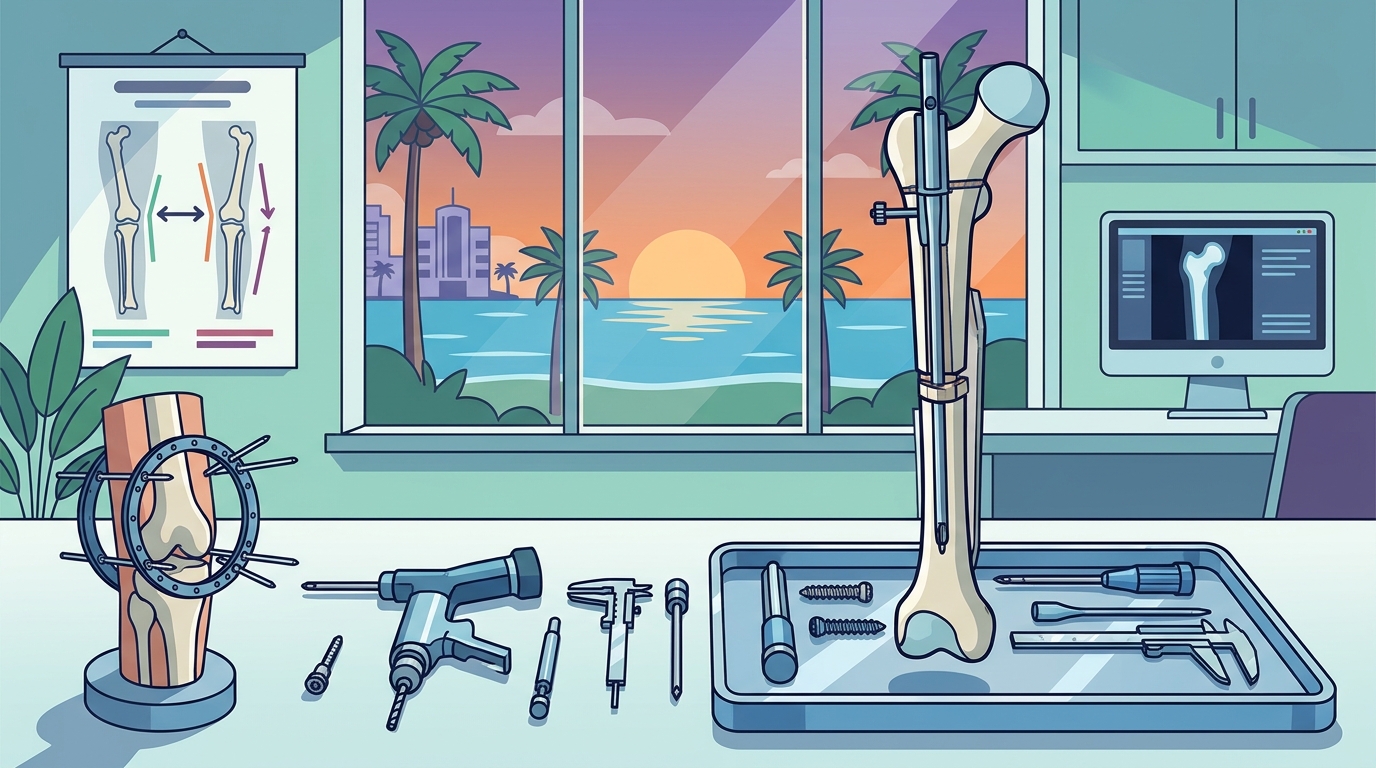
Modern limb lengthening utilizes internal lengthening nails. These devices are fully implanted inside the bone and controlled by a remote magnet. This approach eliminates the need for external pins, reducing the risk of infection and improving patient comfort. The bone is lengthened gradually, typically at a rate of about 1 millimeter per day. This slow process allows muscles, nerves, and skin to adapt to the new length.
For patients in Miami Beach, limb lengthening surgery offers a precise method for correcting length differences. The procedure is complex and requires a dedicated rehabilitation protocol. Patients must commit to a period of physical therapy to maintain range of motion and strength during the lengthening phase.
Alignment Correction: Bow Legs and Knock Knees
Alignment correction involves surgical procedures that realign the leg to restore proper mechanical axis. Bow legs, or genu varum, cause the knees to angle outward. Knock knees, or genu valgum, cause the knees to angle inward. Both conditions alter how weight is distributed across the knee joint.
Osteotomy Procedures
Osteotomy is a surgical technique where the bone is cut and repositioned to correct the angle. For bow legs, a distal femoral osteotomy may be performed to shift weight away from the inner side of the knee. For knock knees, the correction may involve the femur or the tibia, depending on the source of the deformity. These procedures are joint-preserving, meaning they aim to save the natural knee joint and delay or avoid the need for knee replacement.
The decision to perform an osteotomy depends on the patient's age, activity level, and the severity of the arthritis. Younger, active patients with early arthritis are often ideal candidates for realignment. The goal is to reduce joint overload and improve long-term function. Bow legs treatment and knock knees treatment are tailored to the specific anatomy of each patient.
The Diagnostic Process
Accurate diagnosis is critical for successful limb deformity correction. The evaluation process begins with a detailed physical examination. The surgeon assesses standing alignment, gait analysis, and range of motion. This clinical assessment provides a baseline for the patient's functional status.
Imaging is the cornerstone of the diagnostic process. Standing full-length X-rays of the legs are essential. These images show how body weight passes through the knee and confirm the degree of alignment abnormality. They also allow for precise measurement of leg length discrepancy. Magnetic Resonance Imaging (MRI) may be used to assess soft tissue structures, such as cartilage and menisci, which are not visible on X-rays.
At Ettore Vulcano, MD, the diagnostic approach is comprehensive. The surgeon reviews all imaging data to plan the surgical strategy. This ensures that the correction addresses the specific anatomical issues causing the patient's symptoms. A thorough diagnosis helps set realistic expectations for the outcome and recovery timeline.
Recovery and Rehabilitation
Recovery from limb deformity correction is a structured process that requires patient commitment. The timeline varies depending on the specific procedure performed. Limb lengthening typically involves a lengthening phase of several months, followed by a consolidation phase where the new bone hardens. Alignment correction procedures generally have a shorter recovery period, but still require a dedicated rehabilitation program.
Physical Therapy Protocol
Physical therapy is integral to the recovery process. Patients begin therapy immediately after surgery to maintain joint mobility and muscle strength. During the lengthening phase, therapy focuses on preventing stiffness and maintaining function as the bone is gradually separated. The consolidation phase emphasizes strengthening and gait training to prepare the patient for full weight-bearing activities.
Pain management is also a key component of recovery. Modern surgical techniques, including minimally invasive approaches, help reduce postoperative pain. However, some discomfort is expected during the healing process. The surgical team provides guidance on managing pain and swelling to ensure a smooth recovery. Patients are encouraged to follow their rehabilitation protocol closely to achieve the best possible outcome.
Key Takeaways
- Limb deformity correction in Miami Beach is available through specialized orthopedic practices like Ettore Vulcano, MD.
- Limb lengthening uses distraction osteogenesis to gradually increase bone length, correcting discrepancies or enhancing height.
- Internal lengthening nails are the modern standard for limb lengthening, offering greater comfort and lower infection risk than external fixators.
- Alignment correction for bow legs and knock knees involves osteotomy to realign the leg and preserve the natural knee joint.
- Standing full-length X-rays are essential for diagnosing alignment and length abnormalities.
- Recovery requires a dedicated physical therapy program to maintain mobility and strength during the healing process.
- Both functional and cosmetic indications for limb lengthening require careful evaluation of anatomy and patient motivation.
Frequently Asked Questions
What is the most common reason for limb lengthening surgery?
The most common functional reason for limb lengthening surgery is a leg length discrepancy that causes pain, limping, or joint problems. A difference of more than 2 centimeters often leads to significant gait abnormalities and early arthritis in the hip or knee. Cosmetic height enhancement is another common indication for elective surgery.
How long does limb lengthening surgery take to complete?
The entire limb lengthening process typically takes several months. The lengthening phase, where the bone is gradually separated, lasts about 1 to 2 months. The consolidation phase, where the new bone hardens, takes several more months. The total timeline depends on the amount of lengthening required and the individual healing rate.
Can bow legs be corrected in adults?
Yes, bow legs can be corrected in adults through osteotomy surgery. This procedure realigns the leg to shift weight away from the inner side of the knee. It is a joint-preserving procedure that can help prevent or slow the progression of knee arthritis. The decision to perform surgery depends on the severity of the deformity and the patient's symptoms.
What is the difference between internal and external lengthening devices?
Internal lengthening devices are implanted inside the bone and controlled by a remote magnet. They offer greater comfort and a lower risk of infection compared to external fixators. External fixators are metal frames attached to the outside of the leg with pins. They are used selectively for complex corrections or cases where internal devices are not suitable.
Is limb deformity correction painful?
Some pain and discomfort are expected during the recovery process. Modern surgical techniques, including minimally invasive approaches, help reduce postoperative pain. Pain management strategies are provided to ensure patient comfort. The level of pain varies from patient to patient and depends on the specific procedure performed.
How do I know if I am a candidate for limb lengthening?
Candidacy for limb lengthening depends on several factors, including the severity of the deformity, overall health, and motivation for rehabilitation. A thorough evaluation by an orthopedic surgeon is necessary to determine if the procedure is appropriate. The surgeon will review imaging data and discuss the risks and benefits of the surgery.
Where can I find a specialist for limb deformity correction in Miami Beach?
Patients in Miami Beach can consult with Ettore Vulcano, MD, an orthopedic surgeon specializing in foot and ankle surgery and limb reconstruction. The practice offers advanced surgical options for correcting leg length discrepancies and alignment issues. To schedule a consultation and discuss your specific needs, contact our team.
Conclusion
Patients seeking limb deformity correction in Miami Beach have access to advanced surgical options through specialized orthopedic care. Ettore Vulcano, MD provides expert evaluation and treatment for leg length discrepancies and alignment issues. The practice focuses on personalized care plans that address the specific anatomical needs of each patient. Whether you are considering functional correction or cosmetic enhancement, a thorough consultation is the first step toward restoring balance and mobility. To begin your journey, contact our team to schedule an appointment.