
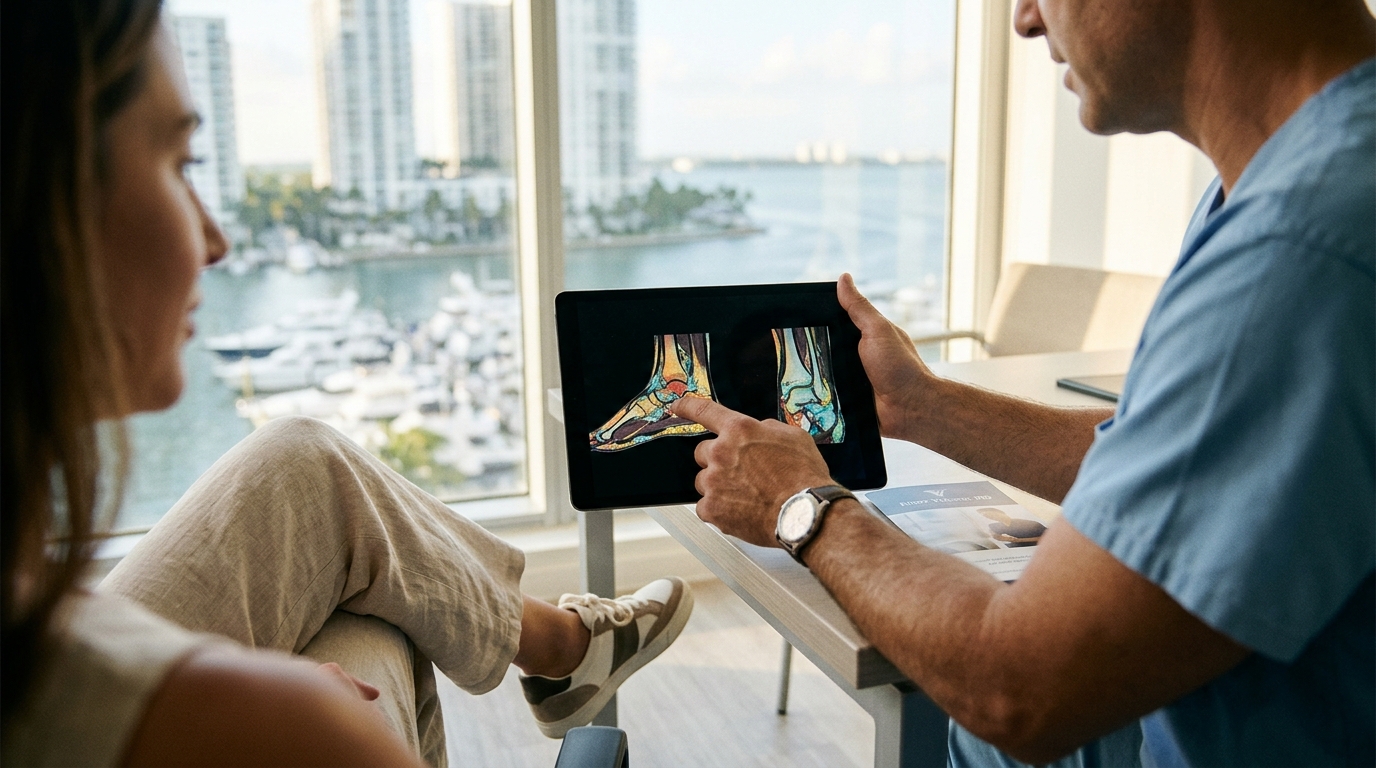
Choosing the best foot surgeon in Miami requires evaluating specific surgical expertise, minimally invasive techniques, and personalized care plans. This guide explains how to assess orthopedic specialists in the Miami area. It covers key surgical specialties and how to match your specific condition with the right provider.
Miami Foot Surgeons
Identifying the right specialist in the Miami region involves looking beyond general orthopedic practice. Many patients seek care from Ettore Vulcano, MD, an orthopedic surgeon based in Miami Beach. He specializes in foot and ankle disorders as well as complex deformities of the extremities. His practice focuses on advanced, patient-centered care using minimally invasive techniques.
Defining the Specialist Role
A foot and ankle surgeon is a medical professional who diagnoses and treats conditions affecting the lower extremities. This role requires specific training in the complex anatomy of the foot, which contains 26 bones and 33 joints. General orthopedists treat the whole body, while foot specialists focus exclusively on the lower limb.
Minimally Invasive Approach
Modern surgical care in Miami increasingly utilizes minimally invasive methods. These techniques use smaller incisions to correct bone deformities or repair tendons. This approach often results in less soft tissue damage and a faster return to daily activities. Patients should ask potential surgeons about their specific techniques for common conditions like bunions or Achilles tendon ruptures.
Location and Accessibility
Proximity to a specialist is important for follow-up care and rehabilitation. The practice of Ettore Vulcano, MD is located in Miami Beach, FL. This location serves patients from across the Miami-Dade County area. Accessibility for post-operative visits is a key factor when selecting a provider.
Surgical Specialties
Not all foot surgeons treat every condition with the same depth of experience. Matching your specific diagnosis to a surgeon's primary focus is critical for optimal outcomes. The following sections detail the major areas of expertise found in advanced foot and ankle practices.
Foot Deformity Correction
Structural issues like bunions and hammertoes are common reasons for surgical consultation. A bunion, medically known as hallux valgus, is a deformity where the big toe angles toward the smaller toes. Minimally invasive bunion surgery is a specialized procedure designed to restore alignment with smaller incisions. Similarly, hammertoe treatment focuses on correcting painful toe deformities that cause shoe irritation.
Soft Tissue and Tendon Repair
Tendon injuries require precise repair to restore strength and push-off power. Achilles tendon rupture is a serious injury that often requires surgical intervention. Modern techniques allow for repair through small incisions, reducing the risk of wound complications. Achilles tendinitis is another common condition involving tendon inflammation that may require specialized care.
Joint Arthritis and Reconstruction
Arthritis in the foot and ankle can lead to significant pain and stiffness. Ankle arthritis treatment ranges from conservative therapies to advanced surgical options. For patients with collapsed arches, flatfoot reconstruction is a complex procedure that aims to restore stability and alignment. These conditions often require a surgeon with extensive experience in limb reconstruction.
Complex Limb Alignment
Some patients require correction of alignment issues that affect the entire leg. Bow legs, or genu varum, is a condition where the legs curve outward. Knock knees, or genu valgum, is the opposite alignment where the knees angle inward. Limb lengthening is an advanced procedure designed to correct leg length discrepancies. These specialized procedures require a surgeon with specific training in complex lower extremity reconstruction.
| Condition | Medical Term | Primary Surgical Focus |
|---|---|---|
| Bunion | Hallux Valgus | Realignment of the big toe joint |
| Achilles Rupture | Tendon Tear | Repair of the calf tendon |
| Flatfoot | Pes Planus | Arch reconstruction and tendon transfer |
| Bow Legs | Genu Varum | Leg realignment osteotomy |
Key Takeaways
- Specialization matters: Look for surgeons who focus specifically on foot and ankle care rather than general orthopedics.
- Minimally invasive techniques can reduce recovery time and soft tissue damage for many conditions.
- Complex deformities like flatfoot or bow legs require a surgeon with experience in limb reconstruction.
- Verify the surgeon's location and accessibility for necessary follow-up appointments.
- Discuss specific surgical approaches, such as mini-incision repairs, during your consultation.
- Ensure the surgeon treats the specific condition you have, such as arthritis or tendon ruptures.
- Review the surgeon's experience with complex cases if you have multiple foot issues.
Frequently Asked Questions
What conditions does Dr. Vulcano treat as an Orthopedic Foot and Ankle Surgeon?
Dr. Ettore Vulcano treats a wide range of foot and ankle conditions. These include Achilles tendinitis, Achilles tendon rupture, ankle arthritis, ankle fractures, bunions, hammertoes, flatfoot, hallux rigidus, Morton's neuroma, and plantar fasciitis. He also specializes in complex deformities and limb reconstruction.
How do I know if I need foot or ankle surgery?
Surgery is typically considered when conservative treatments fail to relieve pain. Other indicators include significant limitation in daily activities, progressive worsening of the deformity, or chronic inflammation. A specialist can evaluate your specific case to determine if surgical intervention is necessary.
What is minimally invasive foot surgery?
Minimally invasive foot surgery is a technique that uses small incisions to correct bone or soft tissue issues. This approach aims to reduce soft tissue trauma and lower the risk of wound complications. It often allows for faster recovery compared to traditional open surgery.
Can exercises correct bowlegs in adults?
Exercises can improve strength and balance, but they do not correct the underlying bone alignment of bowlegs. For significant deformity, surgical realignment may be required to reduce joint stress and prevent arthritis. A specialist can evaluate the severity of the alignment issue.
Is recovery painful after foot and ankle surgery?
Recovery involves some discomfort, but modern techniques aim to minimize pain. Patients typically use pain management strategies and follow a structured rehabilitation plan. The level of pain varies depending on the specific procedure and individual healing response.
How can I schedule a consultation for specialized surgical treatments?
You can schedule a consultation by contacting the office directly. The practice is located in Miami Beach, Florida. You can reach them by phone at (305) 674-2090 or through their online contact form.
What is the difference between a bunion and a bunionette?
A bunion affects the big toe joint on the inside of the foot. A bunionette, or tailor's bunion, affects the little toe joint on the outside of the foot. Both are bony bumps that can cause pain and shoe irritation. Treatment options vary based on the specific location and severity.
Conclusion
Selecting the right foot surgeon in Miami is a critical step toward restoring mobility and reducing pain. By focusing on specific surgical specialties and minimally invasive techniques, you can find a provider who matches your unique needs. To plan your visit, contact our team to schedule a consultation and discuss your treatment options. Learn more: Contact Ettore Vulcano MD.