
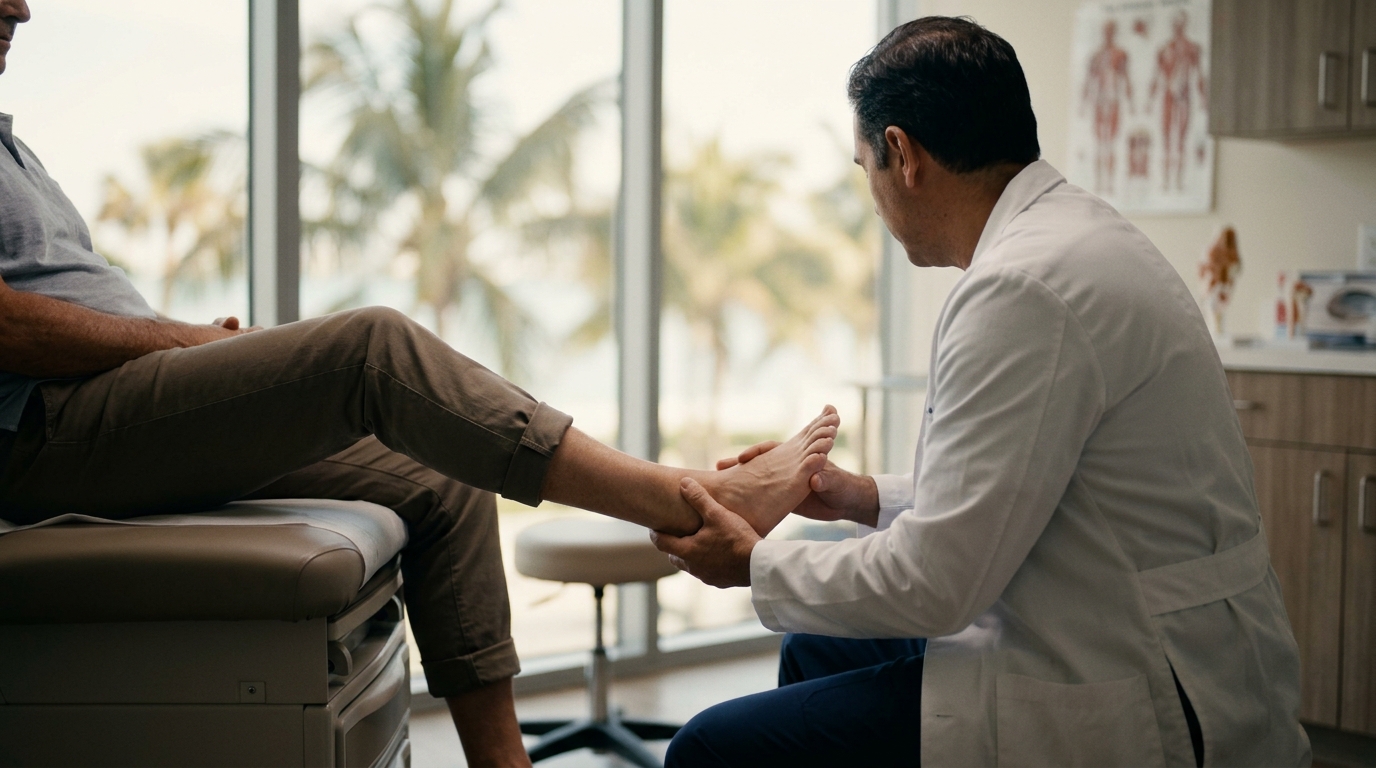
Adult acquired flatfoot deformity is a progressive condition where the arch of the foot collapses, often causing pain and instability. In Miami, orthopedic surgeons offer several surgical options to correct this alignment and restore function. The right procedure depends on the severity of the deformity, the health of the tendons, and your activity goals.
1. Posterior Tibial Tendon Transfer
Repositioning a healthy tendon to support the arch.
This procedure is often the first line of surgical defense for early-stage flatfoot. The surgeon transfers a healthy tendon, usually the flexor digitorum longus, to the inside of the foot. This creates a new dynamic support structure for the collapsed arch. It is best suited for patients whose posterior tibial tendon is still functional but weakened.
2. Medial Arthrodesis (Fusion)
Locking the midfoot bones to create a stable arch.
For more advanced cases where the midfoot joints have worn out, fusion is a common option. The surgeon fuses the navicular and talus bones together to create a rigid, stable arch. This procedure eliminates motion in the affected joints, which can reduce pain and correct the alignment. It is a durable solution for patients with significant arthritis in the midfoot.
3. Lateral Column Lengthening
Lengthening the outer foot to realign the heel.
This technique involves cutting the calcaneus (heel bone) and inserting a bone graft to lengthen the lateral column of the foot. It helps correct the heel bone's inward tilt and restores the foot's natural alignment. This procedure is often combined with other techniques to address complex deformities. It is particularly effective for rigid flatfeet where the heel is significantly tilted.
4. Triple Arthrodesis
Fusing three major ankle joints for maximum stability.
Triple arthrodesis is a comprehensive procedure that fuses the subtalar, talonavicular, and calcaneocuboid joints. It is typically reserved for severe, rigid flatfoot deformities or cases with significant arthritis. While it limits some ankle motion, it provides a very stable and pain-free foot. This is often considered when other less invasive options are not sufficient.
5. Minimally Invasive Flatfoot Correction
Using small incisions to reduce tissue trauma.
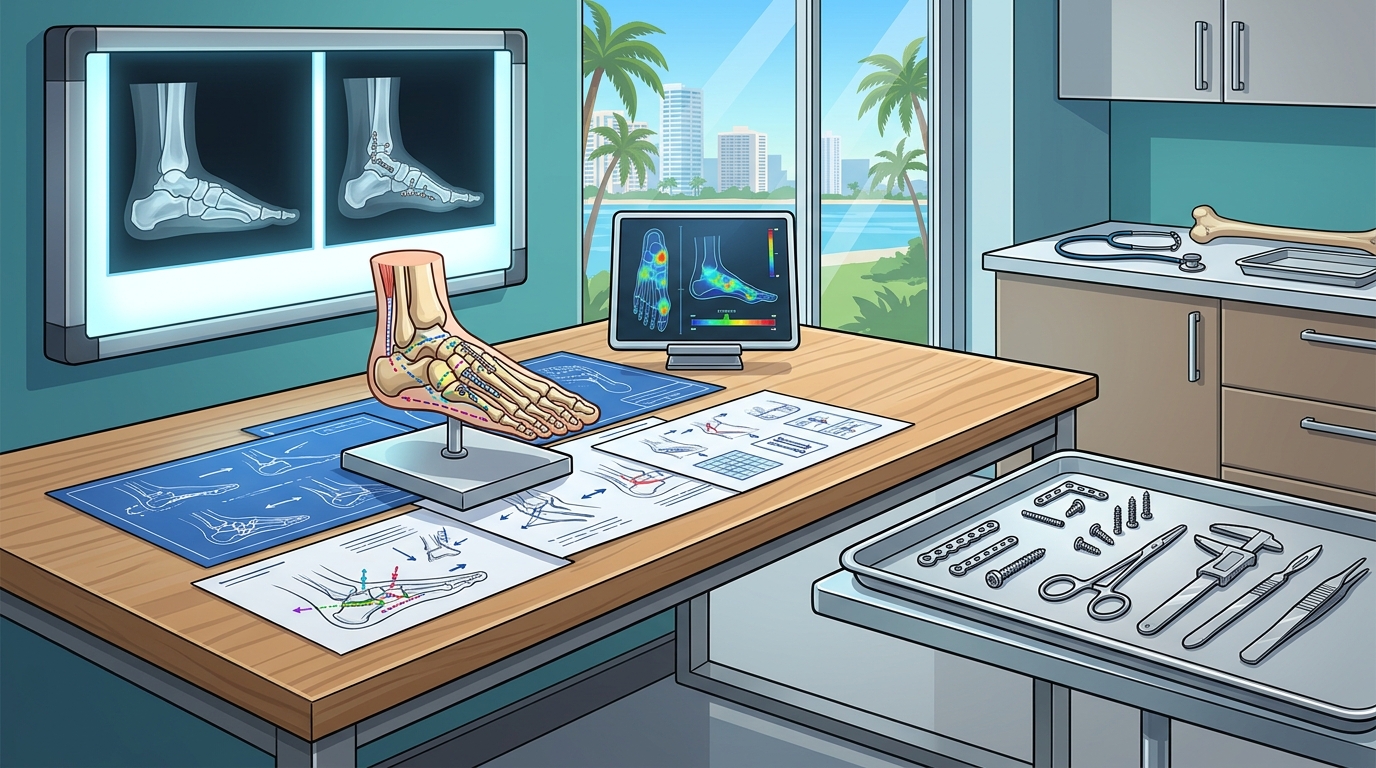
Modern techniques allow for some flatfoot corrections to be performed through smaller incisions. This approach can lead to less postoperative pain and a potentially faster initial recovery. Dr. Ettore Vulcano, an orthopedic foot and ankle surgeon in Miami, specializes in minimally invasive and arthroscopic techniques. This method is suitable for selected patients with specific deformity patterns.
Choosing the Right Procedure
The best surgery for you depends on a detailed evaluation of your foot. Your surgeon will assess the flexibility of the deformity, the health of your tendons, and the presence of arthritis. There is no one-size-fits-all solution; the goal is to match the procedure to your specific anatomy and lifestyle needs.
Frequently Asked Questions
Is flatfoot surgery painful?
Like any major surgery, you will experience pain after the procedure. However, modern pain management techniques and minimally invasive approaches can help reduce discomfort. Your surgeon will provide a detailed pain management plan as part of your recovery instructions.
How long does recovery from flatfoot surgery take?
Recovery timelines vary significantly depending on the specific procedure performed. Some patients may bear weight in a boot within a few weeks, while others may need several months before returning to full activity. Your surgeon will give you a personalized timeline based on your case.
Can I walk after flatfoot surgery?
Most patients are non-weight bearing or limited weight bearing in a surgical boot for the first several weeks. You will gradually increase your activity level as the bones and soft tissues heal. Following your surgeon's weight-bearing instructions is critical for a successful outcome.
Who is a candidate for flatfoot reconstruction?
Candidates are typically adults with painful flatfoot that has not responded to conservative treatments like orthotics and physical therapy. The ideal candidate has a deformity that is correctable and is in good general health. A thorough evaluation by an orthopedic surgeon is necessary to determine candidacy.
Where can I find a flatfoot specialist in Miami?
Dr. Ettore Vulcano is an orthopedic foot and ankle surgeon located at 4302 Alton Road, Suite 220, Miami Beach, FL 33140. He specializes in complex lower extremity reconstruction and minimally invasive techniques. To plan your visit, contact our team to schedule a consultation to discuss your specific condition.
Next Steps
If you are experiencing persistent foot pain or instability, it is important to seek a professional evaluation. Contact our team to schedule a consultation and discuss your treatment options.